Source: wallpaperflare.com
There’s something quietly meticulous about Swiss coffee. It’s a craft, a ritual, and, in many ways, a reflection of the country itself.
The Swiss don’t produce coffee beans domestically, yet they’ve managed to create a coffee culture that rivals nations with centuries of cultivation behind them. How? Through precision, balance, and an obsessive commitment to quality.
A Nation Obsessed with Craftsmanship
When people think of Switzerland, they think of craftsmanship. Watches, chocolate, and banking often steal the spotlight, but coffee deserves a place on that list. Every espresso shot or cappuccino poured in a Swiss café benefits from the same cultural DNA that drives the country’s broader excellence.
Switzerland approaches coffee with an engineer’s mind and an artist’s touch. The beans may come from Brazil, Ethiopia, or Guatemala, but once they arrive on Swiss soil, the process becomes something entirely unique.
Among the artisans leading this pursuit of perfection is a Swiss coffee roaster, known for transforming careful roasting into an exact science.
From roasting to blending, every step is optimized for precision. It’s not unusual for roasters to work with farmers directly, fine-tuning roast profiles for humidity, altitude, and even brewing method.
Source: dailycoffeenews.com
Small-Batch Roasting and Consistency
Most of the coffee consumed in Switzerland comes from small or medium-sized roasters, not global chains. These roasters don’t rely on industrial volume – they rely on control. Every batch is monitored, logged, and tasted repeatedly.
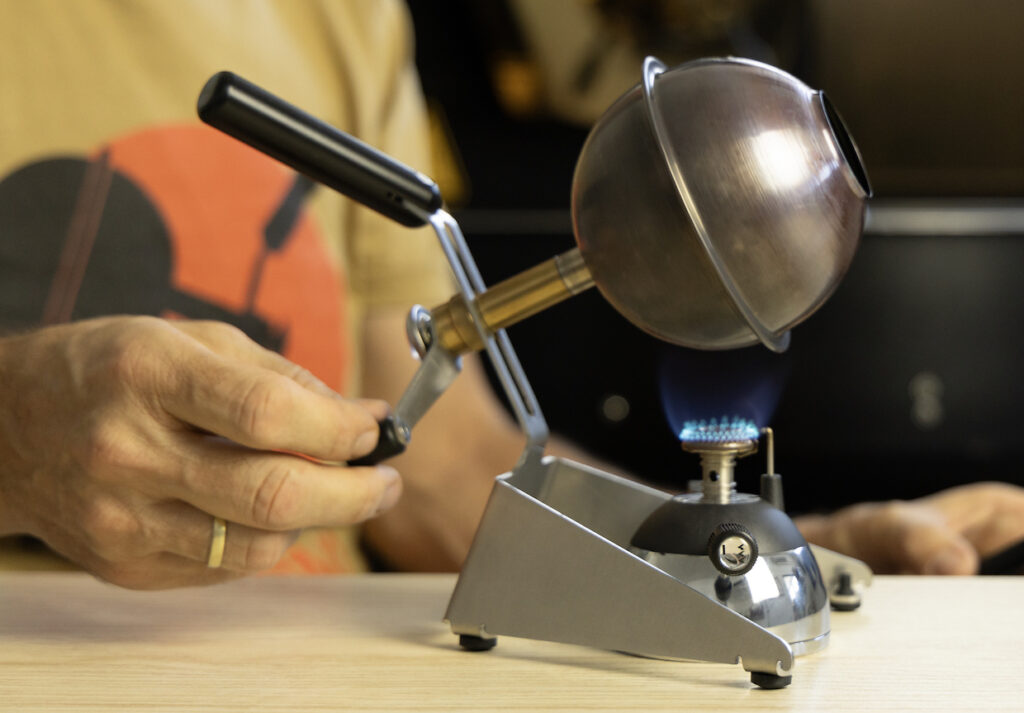
Swiss coffee roasters treat every roast like a science experiment. It’s all about repeatability, ensuring that every espresso poured today tastes exactly as it did last week.
Roasters often focus on:
- Precise roast profiling: adjusting temperature and time by seconds
- Origin-specific blends: balancing sweetness, acidity, and body with near-mathematical ratios
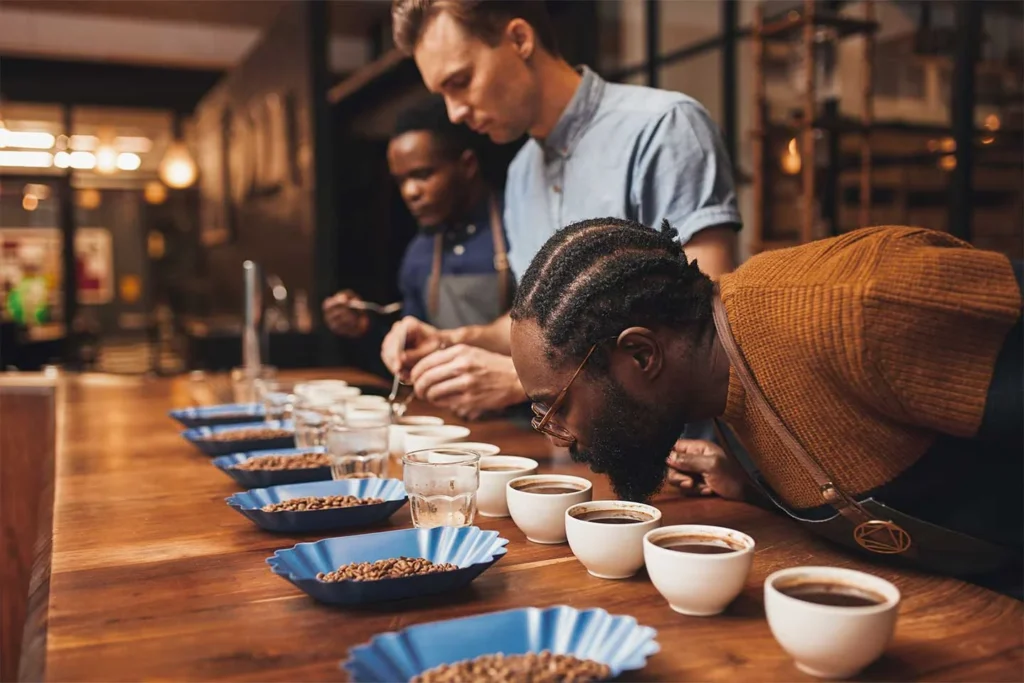
- Regular calibration: using refractometers and cupping scores to measure extraction consistency
That devotion to precision doesn’t just happen in factories. It extends to cafés, hotels, and even home espresso setups. A Swiss barista’s toolkit looks more like a laboratory bench than a kitchen counter.
Historical Roots of Swiss Coffee Culture
The Swiss coffee tradition didn’t start with the rise of espresso culture in the 20th century. Its roots trace back to the early 1800s, when cafés became hubs for intellectuals, artists, and travelers.
Switzerland’s central European position meant that influences flowed in from Italy, France, and Austria, creating a blend of café traditions that still defines the country’s scene today.
By the time espresso machines started appearing in Italy in the early 1900s, the Swiss were already experimenting with their own versions. They didn’t just copy – they refined. The result was a smoother, cleaner expression of espresso, built around lighter roasts and balanced extraction.
Coffee and Swiss Neutrality
There’s an interesting cultural layer to it all. Switzerland’s neutrality and multiculturalism shaped its coffee identity more than most realize.
Italian espresso culture, French café etiquette, and Germanic precision all found a home in one country. The result? A uniquely balanced, hybrid coffee identity.
Source: hospitalityinsights.ehl.edu
Why Swiss Coffee Tastes Different
It’s tempting to assume that coffee is coffee. But the moment you taste a well-made Swiss espresso or cappuccino, something feels distinct. There’s a quiet smoothness – a clarity in flavor that sets it apart.
So what makes it different?
1. Water Quality
Switzerland’s water is some of the cleanest in the world. And for coffee, water isn’t just an ingredient – it’s a variable that can make or break flavor. Minerals like calcium and magnesium affect extraction and mouthfeel.
Swiss water, naturally balanced and soft, allows for more delicate flavor notes to shine through without bitterness or muddiness.
2. Machine Calibration and Technology
The Swiss engineered machines to perfect it. Brands like Jura, Schaerer, and Thermoplan lead the world in automatic and semi-automatic espresso systems. Their designs are built on precision control of temperature, pressure, and flow. That’s why you’ll find Swiss coffee machines in Michelin-star kitchens and major hotel chains across the globe.
|
Swiss Machine Brand |
Specialty |
Known For |
| Jura | Automatic espresso systems | Consistency, design, and intuitive interfaces |
| Schaerer | Commercial coffee equipment | High volume with precision extraction |
| Thermoplan | Professional espresso systems | Used by Starbucks globally for reliability |
It’s not just hardware – it’s philosophy. Swiss engineering doesn’t tolerate “close enough.” The same mindset that builds a Rolex drives the pursuit of the perfect espresso shot.
3. Blending Tradition and Modern Palates
Swiss coffee blends tend to favor balance over boldness. While Italian roasters often chase intensity, Swiss roasters prize clarity. Their blends often combine beans from multiple continents to achieve harmony between acidity, aroma, and body.
Common flavor profiles include:
- Nutty and chocolatey notes from Latin American beans
- Citrus and floral tones from East African origins
- Syrupy sweetness from select Asian varieties
It’s a blend philosophy that values equilibrium more than extremes.
Source: gaggia.com
The Role of Café Culture in Daily Life
Coffee isn’t a sidekick to Swiss life – it’s woven into it. Walk through Zurich, Geneva, or Lausanne, and you’ll find cafés that feel like extensions of people’s homes.
Conversations run long, and the pace is unhurried. Coffee breaks aren’t about caffeine intake; they’re about pausing with intention.
The “Pause Café” Tradition
In the workplace, a “pause café” is sacred. It’s not just a few minutes between tasks – it’s a ritual of regrouping. Employers encourage it, knowing that productivity often returns stronger after those few sips of espresso. It’s a reminder that coffee is as much about social balance as sensory pleasure.
Espresso Meets Alpine Charm
In mountain towns, the coffee scene takes on a different tone. Skiers finish their runs with cappuccinos in chalet cafés.
Locals sip espressos alongside slices of nut torte or dark chocolate. There’s something profoundly Swiss about combining precision and pleasure in a single moment like that.
The Science Behind Swiss Roasting
While culture explains part of the story, science fills in the rest. Swiss roasters rely heavily on controlled roasting environments and advanced analytics to maintain their standards. Temperature sensors, data logs, and sample testing are standard tools of the trade.
How Swiss Roasting Differs from Other Methods
|
Element |
Typical Approach |
Swiss Approach |
| Batch Size | Large industrial | Small, controlled micro-batches |
| Roast Profile | Darker for intensity | Medium-light for clarity |
| Quality Control | Periodic | Continuous digital monitoring |
| Cupping Frequency | Once per batch | Multiple times per profile cycle |
This obsessive calibration results in cleaner flavor expression. The beans never taste scorched or flat, and even milk-based drinks maintain clarity in their flavor.
The Swiss Relationship With Sustainability
Switzerland’s coffee excellence doesn’t stop at the cup. Sustainability plays a huge role in the industry’s ethics.
Many Swiss roasters invest directly in farmer partnerships, traceability programs, and environmental certifications.
Key Sustainability Practices
- Direct trade relationships that ensure fair pricing for growers
- Energy-efficient roasting equipment to reduce emissions
- Biodegradable capsules and packaging for consumer use
- Carbon-neutral logistics in both production and shipping
For many Swiss brands, excellence isn’t just about taste – it’s about conscience. A premium product can’t ignore the people and ecosystems behind it.

Source: perfectdailygrind.com
Home Brewing in the Swiss Style
Coffee culture in Switzerland doesn’t end at the café door. Home brewing has evolved into a kind of domestic ritual, supported by high-end machines and detailed recipes. The average Swiss household treats coffee equipment as a kitchen essential, not a luxury.
Common Home Brewing Methods
- Automatic espresso machines (Jura, DeLonghi, etc.)
For those who want café-quality results without manual intervention. - Stovetop moka pots
A nod to Italian heritage, still loved for its rich, concentrated flavor. - Manual pour-over setups
Increasingly popular among younger generations for its simplicity and flavor control.
The typical home barista in Switzerland tracks grind size, water temperature, and brew ratios the same way a baker tracks flour weights. Consistency, always, is the end goal.
Why the Swiss Coffee Model Works
The success of Swiss coffee lies in its ecosystem. Each part – engineering, roasting, café service, and consumer expectation – reinforces the other.
Precision, respect for ingredients, and a culture of measured pleasure combine to create something rare: an experience that’s both technically perfect and emotionally satisfying.
It’s not an accident that so many of the world’s most respected coffee machines and blends trace their origins back to Switzerland. The country’s coffee tradition stands as a quiet but powerful example of how methodical care can turn something everyday into something exceptional.
Final Thoughts
Swiss coffee doesn’t shout for attention. It doesn’t rely on trendiness or flashy flavors. It’s calm, deliberate, and self-assured. Behind every sip lies a lineage of craftsmanship that treats flavor like a responsibility, not a coincidence.
To drink coffee in Switzerland is to taste what happens when patience meets precision. It’s not the strongest brew on earth, nor the most exotic, but it’s arguably one of the most perfectly made. And perhaps that’s the most Swiss quality of all.